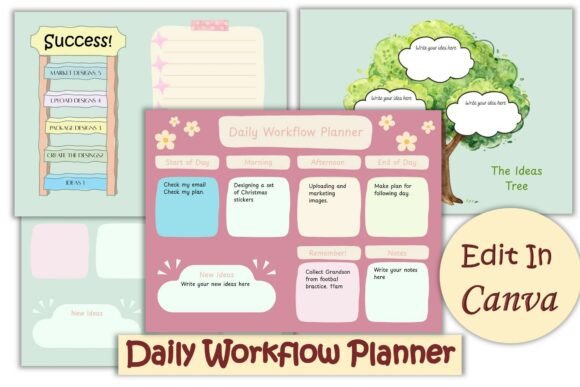
Master Your Day with a Workflow Daily Planner
There’s a unique kind of energy that comes from a well-organized day. It’s the feeling of clarity, of knowing exactly what needs to be done and when, which frees up mental space for creativity and focus. For designers, entrepreneurs, and anyone juggling multiple projects, this clarity isn’t just a nice-to-have—it’s essential. A static, one-size-fits-all planner often falls short because our work isn’t static. That’s where a dynamic, visual approach to planning can make all the difference, transforming your daily routine from a list of tasks into a cohesive workflow.
More Than a To-Do List: A Visual Command Center
A Workflow Daily Planner functions as your visual command center. Unlike a simple list, it’s designed to map out the flow of your day, connecting tasks, appointments, and even those spontaneous bursts of inspiration. The appeal lies in its structure and adaptability. Imagine a set of pages that doesn’t just tell you what to do, but helps you visualize how your day connects—from morning routines to creative deep work and administrative blocks. This kind of thoughtful layout supports better time management and reduces the cognitive load of deciding what’s next.
The true power of a customizable digital planner, like the one available through Canva, is its inherent flexibility. You’re not locked into a pre-printed format. Need more space for project brainstorming on a Tuesday? You can adjust it. Want to color-code your client work versus your internal projects? A few clicks change the entire palette. This level of personalization means the planner evolves with you, becoming a true reflection of your unique work style and brand aesthetic. It’s a living document, not a disposable one.
Integrating Planning into Your Brand Ecosystem
For anyone building a brand, consistency is king. The tools you use, even behind the scenes, can influence your mindset and output. A beautifully designed planner that aligns with your brand’s colors and style does more than keep you organized; it reinforces your brand identity on a daily basis. When your personal workspace feels aligned with your professional brand, it creates a seamless mental transition into creative and strategic thinking.
This principle extends to practical applications. Consider these scenarios:
- Social Media Content Calendars: Use the planner pages to map out your weekly content themes, posting schedule, and platform-specific notes. The visual layout helps you see the balance of your content mix at a glance.
- Project Management for Freelancers: Track client deliverables, revision deadlines, and communication milestones. The "Ideas Tree" feature is perfect for capturing scope creep or new feature requests without losing them.
- Product Launch Timelines: Outline pre-launch, launch day, and post-launch tasks for a new product or service. Printing it off creates a tangible, shareable asset for your team.
- Editorial Calendars for Bloggers and Publishers: Plan topics, research deadlines, writing blocks, and publication dates across multiple pages, giving each piece of content the space it needs.
By using a planner that you’ve personally edited—down to the font and sticker placement—you’re not just organizing tasks; you’re engaging in a form of design thinking applied to your own productivity.
Practical Tips for Making It Your Own
Getting the most out of a customizable template involves a few thoughtful steps. First, think about your primary need. Is it daily task management, weekly project overview, or monthly goal setting? Start by customizing the pages that address your biggest pain point. If you’re a visual thinker, lean into the color-coding and sticker options. Use a specific color for all financial tasks, another for creative work, and a third for marketing.
Font choice in your planner, while personal, can subtly impact usability. A clean, sans-serif font is excellent for readability in task lists. You might pair it with a more expressive script or handwritten font for section headers or motivational quotes to inject personality. The key is balance—ensure that the text is easy to scan quickly when you’re in the middle of a busy day.
Don’t overlook the utility of the "Ideas Tree." This is your parking lot for brilliance. When a random thought for a new project, a potential collaboration, or a solution to a problem pops up, jot it down here immediately. This practice clears your mind, allowing you to return to your focused tasks without the anxiety of forgetting a great idea. Review this section weekly to see which ideas have legs and which can be archived.
From Digital Screen to Printed Page
One of the greatest advantages of a digital-first planner is the choice of format. Some days, you need the tactile satisfaction and focus that comes from writing on paper. Other days, the ability to copy-paste links, integrate with other digital tools, and access your plan from any device is paramount. A high-quality template gives you both options without compromise.
When you print your customized planner, you create a dedicated artifact for your work. It can sit on your desk as a constant visual reference, free from the distractions of browser tabs and notifications. For client meetings or team brainstorms, a printed weekly overview can facilitate more focused discussion than a shared screen. The process of editing in Canva and then printing ensures that what you see on screen is what you get on paper—no layout surprises or formatting headaches.
Ultimately, the goal of any planning system is to reduce friction and amplify your effectiveness. A Workflow Daily Planner that’s designed to be edited, personalized, and integrated into your existing routines does just that. It’s not about adding another step to your day, but about creating a single, reliable hub that brings all the moving parts of your work and life into a coherent, manageable, and even inspiring view. When your tools are aligned with your intentions, staying on track becomes a natural part of the process.